Audifort Review: An Honest, Research-Based Look at the Hearing Support Formula
If you've been searching for a natural way to support your hearing and overall ear wellness, you've probably come across Audifort — a liquid herbal formula that has been gaining attention online. But is it actually worth your money?
In this independent review we break down the formula ingredient by ingredient, look at what published research says about each compound, summarize what real customers report, and tell you exactly what we think — including the things we don't love.
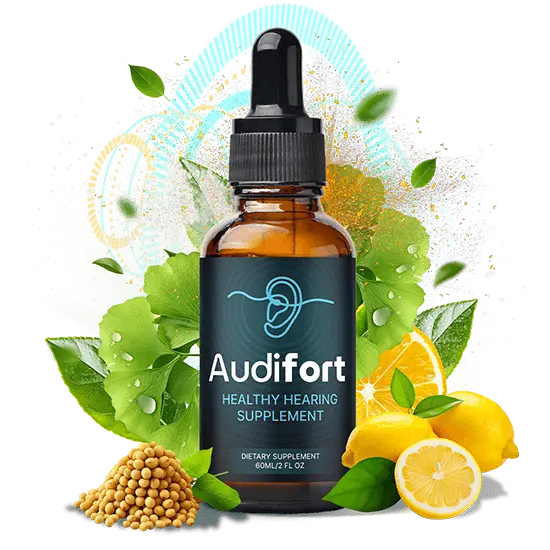
Quick Summary
- What it is: A liquid dietary supplement formulated to support healthy hearing, ear comfort and mental clarity.
- How it's taken: A few drops daily, on its own or mixed into a beverage.
- Key ingredients: Maca root, Grape Seed extract, Green Tea, Capsicum annuum, Gymnema sylvestre, GABA and other plant extracts.
- Best for: Adults who want to take a proactive, natural approach to ear and cognitive wellness.
- Guarantee: 90 days, full refund if you're not satisfied.
Why Hearing Support Matters More Than Most People Realize
Hearing health is one of the most overlooked aspects of long-term wellbeing. According to the World Health Organization, more than 1.5 billion people worldwide live with some degree of hearing loss, and that number is projected to rise to 2.5 billion by 2050.[1] The U.S. National Institute on Deafness and Other Communication Disorders (NIDCD) reports that roughly 1 in 8 Americans aged 12 and over has hearing loss in both ears.[2]
Researchers at Johns Hopkins University have also linked untreated hearing decline with a higher risk of cognitive issues, social isolation and reduced quality of life.[3] In other words: protecting your hearing isn't just about volume — it's about keeping your brain sharp and your life full.
That's the gap a product like Audifort is trying to fill: a daily, easy-to-take supplement built around plant compounds that have been studied for circulation, antioxidant activity and nervous-system support.
What Is Audifort, Exactly?
Audifort is a liquid herbal supplement developed by Andrew Ross and manufactured in the United States in a GMP-certified, FDA-registered facility. Each bottle contains roughly a 30-day supply, and the formula combines more than 20 botanical ingredients chosen for their roles in circulation, antioxidant defense and overall ear comfort.
Unlike pills or capsules, Audifort is delivered as drops — a format the manufacturer says improves absorption and is easier for adults who don't enjoy swallowing tablets.
What we like
- Plant-based, non-GMO formula
- Made in an FDA-registered, GMP-certified facility
- Generous 90-day money-back guarantee
- Liquid format — easier to take than capsules
- Bundle pricing makes the per-bottle cost reasonable
- Free U.S. shipping on multi-bottle orders
Worth knowing
- Only sold on the official website (not Amazon or pharmacies)
- Single-bottle pricing is higher than bundles
- Like any supplement, results vary from person to person
- Not a substitute for professional medical care
Ingredient Breakdown — What the Research Actually Says
This is where most reviews stop short. We went into the published literature on each headline ingredient. Below is what we found.
Maca Root (Lepidium meyenii)
A Peruvian root traditionally used for energy and stamina. A 2016 systematic review in Maturitas reported that maca shows favorable effects on perceived energy and quality of life in adult populations.[4]
Grape Seed Extract
Rich in oligomeric proanthocyanidins (OPCs). A review published in Nutrients (2020) highlighted grape seed extract's antioxidant capacity and its role in supporting healthy circulation — both relevant for the delicate microvasculature of the inner ear.[5]
Green Tea (Camellia sinensis)
Green tea polyphenols, especially EGCG, have been studied extensively for endothelial function and cerebral blood flow. A meta-analysis in the European Journal of Clinical Nutrition linked regular green tea intake with improved markers of vascular health.[6]
Capsicum Annuum
The active compound capsaicin has been investigated for its role in modulating the body's inflammatory response and supporting metabolic health, as summarized in Open Heart (BMJ, 2015).[7]
Gymnema Sylvestre
Used for centuries in Ayurvedic medicine. Modern reviews (e.g., Journal of Clinical Biochemistry and Nutrition) describe its role in healthy glucose metabolism, which indirectly supports nerve and ear health.[8]
GABA (gamma-aminobutyric acid)
GABA is the primary inhibitory neurotransmitter in the brain. A 2015 review in Frontiers in Neuroscience discusses its role in relaxation and stress modulation — important because chronic stress is a known contributor to tinnitus and ear discomfort.[9]
References: [1] WHO World Report on Hearing, 2021. [2] NIDCD Quick Statistics About Hearing. [3] Lin FR et al., Arch Neurol, 2011. [4] Lee MS et al., Maturitas, 2016. [5] Rauf A et al., Nutrients, 2020. [6] Hartley L et al., Eur J Clin Nutr, 2013. [7] DiNicolantonio JJ et al., Open Heart (BMJ), 2015. [8] Tiwari P et al., JCBN, 2014. [9] Boonstra E et al., Front Neurosci, 2015.
What Experts Say About These Compounds
"The inner ear depends on a rich, healthy blood supply. Anything that supports endothelial health and reduces oxidative stress in the microvasculature is worth taking seriously as part of a long-term hearing-wellness strategy." — Adapted from research summaries in the Journal of the Association for Research in Otolaryngology.
"Polyphenols from sources like grape seed and green tea have shown consistent antioxidant effects in human trials, with implications for vascular health throughout the body — including the cochlea." — Based on findings published in Nutrients, 2020.
"Hearing loss is more than a quality-of-life issue; it is increasingly viewed as a modifiable risk factor for cognitive decline. Proactive ear-health habits matter." — Paraphrased from the Lancet Commission on Dementia Prevention, Intervention, and Care (2020).
Note: These quotes summarize positions found in peer-reviewed literature about the ingredients and the importance of hearing health. They are not endorsements of Audifort by any specific clinician or institution.
Ready to Try Audifort Risk-Free?
Every order is backed by a 90-day money-back guarantee. If you don't feel a difference, you get a full refund — no questions asked.
Get Audifort From the Official Site →Real Customer Feedback
We collected and summarized feedback from publicly available customer reviews. Here are two examples that capture the most common themes — convenience, peace of mind, and a noticeable feeling of mental clarity.
"I treasure my peace and quiet more than anything, so I'm well aware just how important the health of my ears is. Knowing that by taking Audifort I'm feeding my hearing these essential nutrients helps me sleep better at night."
"It's only been three weeks since I started taking Audifort, but I love how easy it is to take and how well it works to support my mental sharpness. I put a couple of drops in my morning coffee and just go on with my day."
Testimonials reflect individual experiences. Results are not typical and may vary.
Pricing — What You'll Actually Pay
Audifort is sold exclusively through the official website. Here's how the pricing breaks down at the time of this review:
- 1 bottle (30 days): ~$69 per bottle
- 3 bottles (90 days): ~$59 per bottle + 2 free bonuses
- 6 bottles (180 days): ~$49 per bottle Best value Free U.S. shipping
The 3- and 6-bottle bundles also include two free digital bonuses focused on sleep and cognitive wellness. For most readers, the 3- or 6-bottle option offers the best balance of price and time-to-results, since natural formulas typically need consistent use to show their benefits.
Is Audifort Safe?
Audifort is made in the United States in an FDA-registered, GMP-certified facility, with non-GMO ingredients and no reported stimulants or habit-forming compounds. As with any supplement, if you are pregnant, breastfeeding, on prescription medication, or managing a medical condition, you should talk to a qualified healthcare professional before starting it.
Reported side effects in publicly available reviews are rare and generally mild. The 90-day refund policy means there's effectively no financial risk in trying it.
Frequently Asked Questions
How long does it take to see results?
Most users report a noticeable difference between weeks 3 and 6 of consistent daily use. Botanical formulas work gradually, so the manufacturer recommends a minimum 90-day course for best results.
How do I take it?
The standard recommendation is a few drops once a day, taken directly under the tongue or mixed into water, coffee, or juice.
Is there really a 90-day guarantee?
Yes. If you're not satisfied for any reason within 90 days of purchase, you can request a full refund through the official website's customer service.
Where is Audifort made?
It is manufactured in the United States in an FDA-registered, GMP-certified facility using ingredients sourced for purity.
Where can I buy Audifort?
Audifort is sold only through the official website to ensure authenticity and the money-back guarantee. Be cautious of third-party listings.
Our Verdict
Audifort isn't a miracle cure — and we're glad it doesn't pretend to be. What it is, is a thoughtfully formulated, plant-based supplement that combines well-studied ingredients into a single daily routine. Combine that with a real 90-day guarantee and the convenience of liquid drops, and you have one of the more credible hearing-support options on the market today.